Cellebrite’s Autumn 2026 Release introduces enhanced agentic AI-powered investigations with Genesis, expanded device access and new capabilities to help teams uncover critical evidence faster....

Cellebrite’s Autumn 2026 Release introduces enhanced agentic AI-powered investigations with Genesis, expanded device access and new capabilities to help teams uncover critical evidence faster....
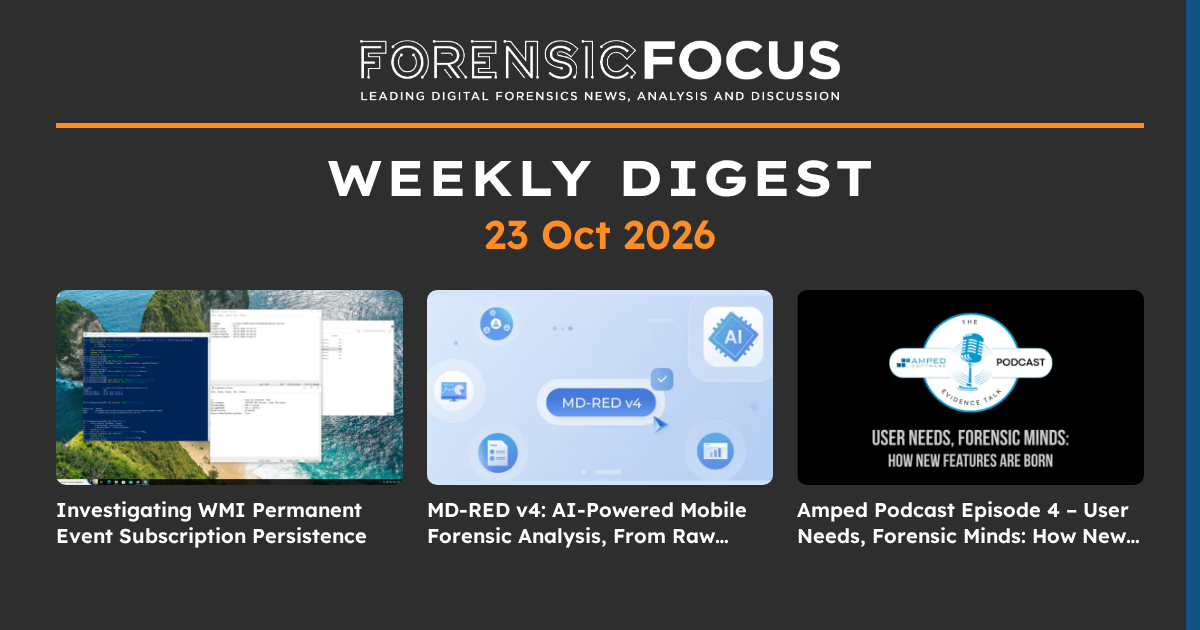
23rd October 2026
Discover what’s new on Forensic Focus: explore WMI permanent event subscription persistence with Vitalii, see how MD-RED v4 handles AI-powered mobile forensic analysis, hear how user feedback shapes new features in Amped FIVE, and more....read more

22nd October 2026
What sets purpose-built investigative AI apart from general-purpose LLMs? Discover how Cellebrite Genesis helps investigators analyze digital evidence with traceable findings, warrant-bound search, and secure data handling....read more
22nd October 2026
Sam Abbot, Emi Polito and Andrea Frisina go behind the scenes to show how your feedback becomes new features in Amped FIVE, Replay, Authenticate and DVRConv, and why forensic soundness always comes first....read more